









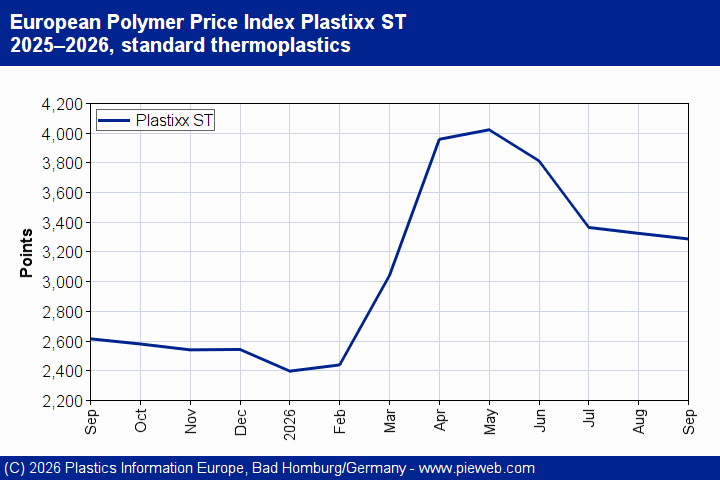
Polymer prices set to rise in October / Sharp feedstock increases drive PE, PP, PVC, styrenics higher / Weak demand limits pass-through, PET also firms
PE: At the beginning of September, prices initially followed the movement of the ethylene contract, which fell by EUR 12.50/t. When the prospect of further price reductions emerged as the month progressed, producers responded by imposing order freezes. By the second half of the month, deliveries were only being made if converters accepted price increases. As a result, September turned out to be a relatively calm month. Following production cutbacks at some plants and reduced output during the holiday period, producers still have sufficient material available. The order situation is stable, but the seasonal improvement in demand normally seen in autumn is unlikely to materialise. As a result, inventories are likely to be drawn down in an attempt to ride out the period of peak prices. With the ethylene contract rising by a significant EUR 80/t for October, corresponding price increases from producers are to be expected. Statements made towards the end of September in some cases even pointed to triple-digit increases. Such demands do not appear entirely realistic, however. In most cases, increases are likely to range between EUR 50/t and EUR 80/t, depending on the volume purchased. Nevertheless, should producers see an opportunity to push prices even higher, further order stops in October cannot be ruled out.
PP: September was an uneventful month: weak demand forced producers to pass on the slightly lower costs for propylene (down EUR 10/t) to processors in most cases. There were only intermittent rollovers, and a slightly stronger decline in prices in individual cases. Despite the plant curtailments, enough material was produced to meet requirements. Imports from Asia decreased somewhat, but still enriched the market significantly, resulting in a clear surplus in supply. The propylene contract for October was fixed at a noticeably firmer level (up EUR 80/t). Producers will try to pass on the increased costs. Markups are therefore expected, but considering the weak demand situation, it is rather unlikely that suppliers will be able to pass on the full amount. Looking at their order books, processors state one thing clearly: the fourth quarter will not be good. Many will only purchase the bare necessities and will start reducing existing expensive stocks early.
PVC: Prices fell in September. At the start of the month, producers were still able to keep reductions below the EUR 12.50/t decrease in the ethylene contract, and in isolated cases even achieved rollovers. As the month progressed, however, prices gradually gave way under the pressure of weak demand. Plant maintenance and production cutbacks also did little to ease the oversupply. The EU anti-dumping investigation launched at the end of September could, however, reduce import pressure over time. One producer took further action, announcing plans to permanently shut down a production plant. In a customer letter, the company said that additional surcharges would be imposed on deliveries after 1 October due to sharply higher energy and logistics costs. According to market participants, other producers also indicated during negotiations that corresponding surcharges would have to be reflected in October prices. The signs therefore point to price increases. In addition to these separately stated surcharges, producers will likely seek to pass on the higher ethylene costs (up EUR 80/t) to converters in October. However, the fact that converters’ order books are still only partially filled is likely to limit the extent to which these increases can be implemented.
Styrenics: The ups and downs in styrenics prices show no sign of coming to an end. For polystyrene and EPS in particular, the triple-digit premiums seen in August were followed by triple-digit discounts in September. The movements were less dramatic for ABS, owing to cost trends for the other components. Although demand picked up slightly after the holiday season, it fell far short of expectations – and was well below the levels usually seen at this time of year. Against this backdrop, the high inventories held by suppliers declined only moderately, particularly as several producers imposed order freezes in the second half of the month. In doing so, they thwarted processors’ attempts to build up stocks in advance. Processors had interpreted the sharp rise in styrene spot prices and the significant increase in benzene costs as a portent of steep premiums in October. And that is precisely what now appears to be happening: the styrene reference contract skyrocketed by EUR 279/t to a four-year high. Triple-digit premiums – far exceeding the scale of September’s reduction – are therefore inevitable. Such sharp price increases in the face of weak demand are a nightmare for the market. Even producers are unlikely to be particularly pleased with the way things are developing. With prices expected to remain high, processors will have little incentive to buy more than strictly necessary.
PET: Overall, the European PET market was relatively calm in September 2026. Demand from end markets remained as weak as before. At the same time, import offers thinned out and became less attractive in price terms. European production suffered from the tighter availability of raw material and the corresponding increase in costs. Large-volume buyers nevertheless used the weak demand situation to secure slight discounts. Smaller converters, by contrast, were frequently under pressure to top up their warehouses, at least moderately, for the first time in several months. Suppliers remained firm in these cases and pushed through slight price increases. Prices rolled over on average. The worsening raw material situation is starting to put pressure on the market. Alongside the situation in the Middle East, which is curtailing imports at all market levels, low water levels on inland waterways are also playing a significant role. Despite subdued demand, underlying requirements are increasingly likely to encounter reduced supply. At least moderate increases can therefore be expected in October.
For more than 35 years, PIE has been an invaluable source of information for European plastics industry decision makers – a quick, yet in-depth look at the development of plastics markets and polymer prices. Available online 24/7 and as a printed newsletter twice a month. To read the entire report, go to www.ki.de and sign up for a 48-hour free trial!