













War in Iran sends prices soaring / Desperate attempts to build up stocks apparent / Converters able to operate only on a day-to-day basis
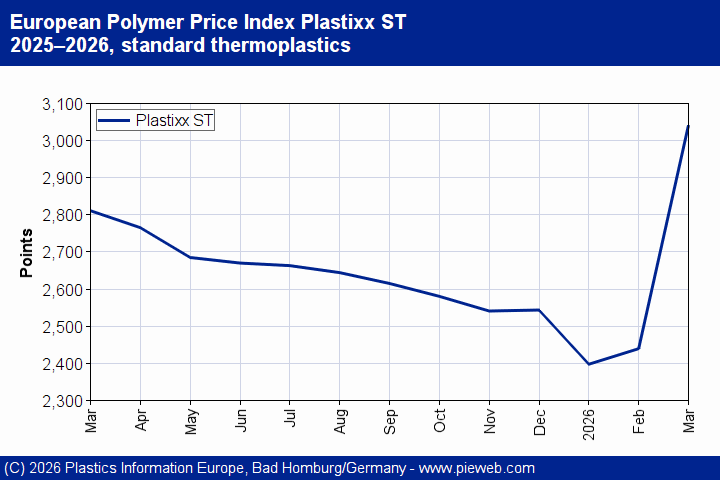
PE: The European ethylene contract rose EUR 50/t in March. However, the Iran war resulted in dramatic cost pressure during the month as energy and raw material prices exploded. Producers have responded with weekly price increases, with quotations rising several hundred euros in a short period of time – up to the end of March, some hikes even exceeded EUR 600/t. Supply also suffered from the escalation in the Middle East conflict. The spot market dried up. In most cases, only contracts were served. Several producers put a stop to incoming orders and offered material at prices calculated by the day. The situation was compounded by a revival on the demand side. This was not only a seasonal development; buyers were looking to build stock for fear availability would soon become a serious issue. For April, the prospects are catastrophic. Prices could skyrocket by more than EUR 1,000/t compared with February. The development of the C2 contract (up EUR 450/t) indicates the severity of the situation. The supply side is unlikely to ease as demand is anticipated to remain stable as long as the war in Iran continues. Converters are buying what they can get. Only the Easter holidays may temporarily dampen activity.
PP: The outbreak of war in the Persian Gulf changed things for propylene abruptly. Prices rose every two to three days and the market changed from a buyer’s to a seller’s market. Due to planned and unplanned plant curtailments around the world, polypropylene became a sought-after commodity. Contracts in Europe could be fulfilled – but just barely and with delays. Material for additional requirements was rarely available. Additional seasonal effects had an impact and generated a normal level of demand overall. Further significant price hikes are expected in April. The main factors driving up quotations are the widely anticipated increases in the cost of propylene, energy, and transport. In addition to these, PIE panellists expect the market to tighten noticeably: a small amount of material and increasing attempts to secure it in order to build up stocks. Processors have to keep a close eye on developments. They will likely try to pass on the higher purchasing costs to their customers as quickly as possible.
PVC: In purely mathematical terms, the EUR 50/t increase in the ethylene contract would have justified a rise of no more than EUR 25/t for PVC in March. The picture on the market, however, was a completely different one. The Iran war drove up energy and logistics costs significantly while also exerting pressure on supply chains. This was the situation as the producers began negotiations, and they generally succeeded in securing hikes of EUR 80/t to EUR 100/t. At the same time, supply declined in comparison with previous months. Disruptions to ethylene deliveries forced numerous producers to curtail their output. While existing contracts were still being met, spot trading came to a virtual halt. The demand side, by contrast, experienced a pickup. Many converters used the opportunity to replenish their stocks, while the order situation improved slightly due to seasonal factors. Looking ahead at April, the next stage of price escalation is on the horizon. The ethylene contract has risen by EUR 450/t, to EUR 1,595/t. This increase is likely to set the tone for PVC price rises. The continued shortage of supply makes further price increases likely. Nevertheless, demand is unlikely to keep pace without restrictions. Many converters are likely to adopt a cautious stance. There is little movement on the import front as well: available volumes remain limited.
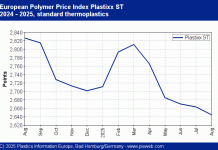
Styrenics: The world has been turned upside down – in less than five weeks since the start of the Middle East war, key international supply streams have been completely cut off and the resulting turmoil is, unsurprisingly, also affecting the styrenics market. While price changes for polystyrene, EPS, and ABS have been extensively linked to the movement in precursor costs for many, many months, this trend has now come to a halt. Concerns about expected supply bottlenecks and the skyrocketing cost of energy, logistics, and raw materials are triggering massive price increases. March, however, only marked the start of this new situation. The styrene reference for March (up EUR 73/t) was only decisive for negotiations conducted in the first week of the month. By the second week, producers were already reacting to the sharp increase in SM spot prices and initiating further increases. Since almost all producers announced immediately afterwards that they were suspending orders – for PS and ABS at least – these new hikes were scarcely applied. They are now set to be implemented in April, along with further rises due to the sharp increase in the styrene reference for April (up EUR 469/t). EPS, by contrast, was still available for the rest of March, albeit at steadily rising prices. Since most contracts had been concluded at the start of the month, suppliers will not only impose further hikes but in many cases also argue that they have to make up for a considerable amount of lost ground as far as prices are concerned.
PET: The Iran war also caused turbulence on the European PET market in March 2026. The de facto shortage of raw materials triggered an increasingly desperate run on the volumes that were still to be had. After the first force-majeure announcements, even medium and long-term supply contracts had to be renegotiated. And the negotiation cycles became increasingly shorter as the month progressed. The price of the material frequently rose from one day to the next. But at least there was still material to be delivered. Overall, sharp increases of at least EUR 100/t to more than EUR 500/t were seen. The supply situation can be expected to worsen still further in April. A number of suppliers recently announced that volumes were already sold out – frequently with the price updated daily at the time of delivery, since the PX reference had not yet been fixed until 30 March. The European contract was settled at EUR 1,040/t, which is a steep rise of EUR 250/t compared with the previous month. Still, considering market participants had been expecting an increase of EUR 300/t or more, this could qualify as a somewhat reassuring development. However, even if the fighting in the Middle East were to come to an end – something that it is impossible to predict at present – it will doubtless take months for things to return to normal. At least the recyclers are set to benefit from a surge in demand for their material after a prolonged lean period.
For more than 35 years, PIE has been an invaluable source of information for European plastics industry decision makers – a quick, yet in-depth look at the development of plastics markets and polymer prices. Available online 24/7 and as a printed newsletter twice a month. To read the entire report, go to www.ki.de and sign up for a 48-hour free trial!